
Ceramic Tableware MOQ: Molds, Packaging & Price Breaks
Learn how ceramic tableware MOQ is determined by molds, production methods, glaze colors, decoration, packaging and quantity price breaks.
OEM vs ODM Ceramic Tableware: Which Model Is Right for Your Brand
Compare OEM and ODM ceramic tableware by design control, molds, MOQ, cost, lead time, IP, quality control and the best fit for your brand.
B2B Ceramic Plate Sizing Standards for Custom Dinnerware Manufacturing
A B2B guide to ceramic plate dimensions, manufacturing tolerances, firing shrinkage, stackability, packaging and custom dinnerware specifications.
Restaurant Dinnerware Testing: Durability & Commercial Washing
Restaurant-grade dinnerware is ware that meets a buyer-defined commercial-use specification. A credible approval combines repeatable impact and thermal tests, stable stacking, resistance to washing and staining, dimensional checks, food-contact evidence a
OEM vs ODM Ceramic Tableware: Which Model Is Right for Your Brand
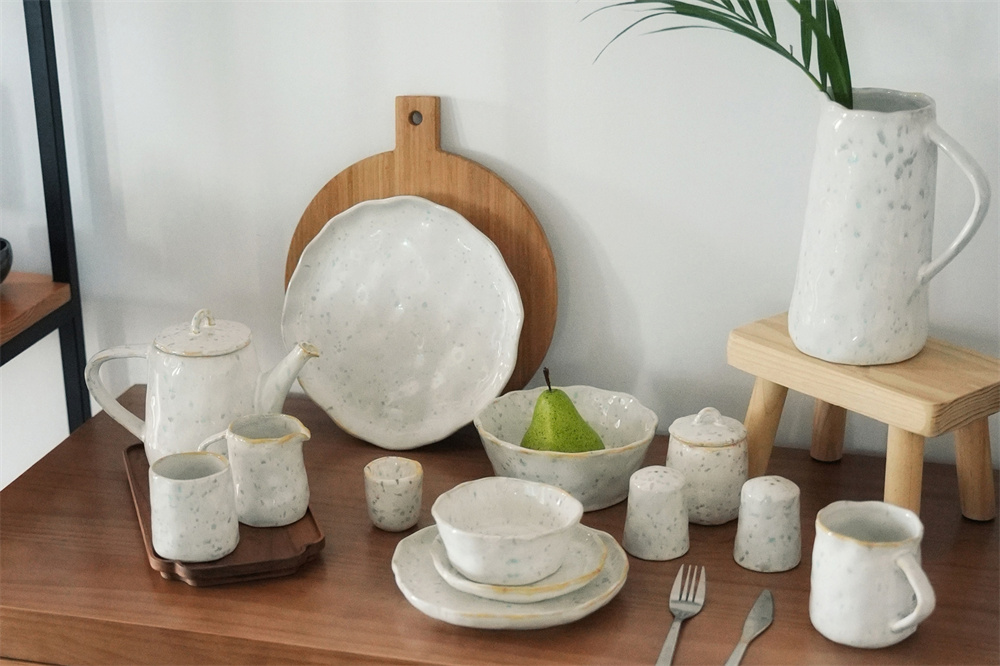
Choosing between OEM and ODM ceramic tableware affects far more than who draws the product. It determines where the design starts, which tooling and approvals are needed, how much technical risk the project carries, and what your brand can protect. At JOYYE, we begin with the difference the finished collection must create for your customer, then choose the development path that can deliver it without adding unnecessary complexity.
|
Short answer |
Start with the project scope, not the label
OEM and ODM are common commercial terms, but suppliers do not always use them in exactly the same way. One factory may describe a new glaze on an existing plate as ODM; another may call it OEM customization. The label cannot tell you who owns the design, whether a mold is exclusive, which tests apply, or what must be approved before production.
That is why our first conversation is practical. What already exists? What must change? What must remain exclusive? Which details affect use, packing or compliance? Once those points are written down, the correct model usually becomes clear.
Three development paths brands can use
Private label for a proven product
Private label usually keeps the existing body, shape and production specification. The brand adds selected elements such as a logo, backstamp, labels or retail packaging. This is often the most efficient route for an initial launch because structural development is limited. It is also the route with the least inherent product exclusivity unless the agreement states otherwise.
If your priority is to validate a category, build an assortment quickly or keep tooling exposure low, review our guide to private label ceramic tableware.
Adapted ODM for controlled differentiation
ODM ceramic tableware begins with a product platform the manufacturer has already developed. A brand may change the glaze, decoration, relief, color story, assortment, backstamp or packaging while retaining the underlying form. Because the base shape and its production parameters are known, ODM can reduce tooling exposure and shorten the technical learning curve.
The tradeoff is straightforward: a familiar platform limits structural freedom. Exclusivity also needs precise boundaries. An exclusive decoration does not automatically make the underlying shape exclusive, and a regional exclusivity agreement may not cover every channel or market.
Full OEM for buyer-led form and function
OEM ceramic tableware is appropriate when the shape, dimensions, handle, relief, rim profile, capacity, stack or service function is central to the product idea. The buyer may provide drawings, CAD files, a physical reference or a detailed design brief. The manufacturer then translates that direction into a form that can be molded, dried, fired, glazed and reproduced within agreed tolerances.
This path provides the greatest design control, but it also creates more decisions: shrinkage compensation, master model and mold development, sample rounds, glaze compatibility, dimensional tolerances, packaging fit and new acceptance criteria. More control is valuable only when the distinction matters enough to justify that work.
OEM vs ODM ceramic tableware comparison
|
|
|---|
| Decision factor | OEM | ODM |
| Starting point | Buyer-led design or specification | Manufacturer-developed base product |
| Design control | High; can include form and function | Medium; usually strongest in surface, assortment and branding |
| Uniqueness | Potentially high when rights and scope are defined | Depends on changes and exclusivity terms |
| New molds | Often required for structural changes | Often optional when the base form is retained |
| Initial investment | Higher due to engineering, tooling and validation | Usually lower because a proven platform is used |
| Development path | More sample and approval stages | Fewer structural stages; decoration still requires approval |
| Technical risk | Higher during new-product development | Lower for the unchanged platform; changes add new risk |
| Best fit | Proprietary or function-led core collections | Faster launches, range extensions and market tests |
These are normal tendencies, not fixed industry rules. A heavily modified ODM project may need more work than a simple OEM item, and an existing OEM mold may make a reorder relatively straightforward. Compare the actual scope line by line.
How much design control does your brand need
A useful test is to remove the logo and packaging from the concept. If the customer should still recognize a distinctive silhouette, proportion, handle, relief or function, OEM or a hybrid path is likely appropriate. If the commercial difference comes mainly from color, glaze, artwork, assortment and presentation, adapted ODM may provide enough control with less development risk.
Use a customization stack to define what changes
Instead of asking whether a project is “custom,” specify the customization layer. Each layer introduces a different set of approvals and commercial consequences.
| Layer | Typical decisions | Likely impact |
| Branding | Logo, backstamp, labels, packaging copy | Artwork approval, print setup and packaging minimums |
| Surface | Glaze, color, hand painting, decal, metallic detail | Color range, decoration tolerance, food-contact scope |
| Form detail | Relief, foot ring, rim, handle or capacity adjustment | Model work and possibly new tooling |
| Structure | New silhouette, dimensions, stack, wall or function | Engineering, molds, trials and new acceptance criteria |
| Assortment | Item mix, colorways and pack configuration | SKU complexity, MOQ allocation and carton design |
JOYYE’s team includes graphic designers, ceramic sculptors and hand painters. In practice, their work connects a moodboard and brand code to decisions that survive firing: form, body, glaze, decoration and the production specification. That translation is where a visual idea becomes a repeatable ceramic product. You can see the range of finish choices in our guide to ceramic finishes.
Molds, ownership and exclusivity need separate answers
A new mold is often required when a project changes the physical structure of the item. It may not be required for a new glaze, decal, backstamp or package on an existing form. Modified relief, a new handle or a changed foot can sit between those cases, so the manufacturer must assess the forming method and tooling impact.
Before approving mold work, put the commercial terms in writing. The contract should identify who pays for the master model and production molds, who owns each asset, where it will be stored, who pays for maintenance, whether the mold can be used for other customers, and what happens when the program ends. Paying a tooling charge does not by itself settle every design or intellectual-property right.
|
Due-diligence checkpoint |
MOQ and cost depend on the complete product system
ODM often has a lower entry cost because an existing mold and known process can be used, but the OEM or ODM label does not determine MOQ on its own. The practical minimum may be driven by clay body, glaze batch, decal printing, hand-painting setup, carton production or the number of SKUs sharing the order. Splitting one order across many shapes and colorways can create a higher effective minimum for each SKU.
Compare total project cost, not only the unit quotation. An OEM budget may include design engineering, models, molds, trials, product testing, sample freight and new packaging. An ODM budget may still include glaze development, decal screens, artwork setup, branded components and samples. Add expected reorders, inventory exposure and the commercial value of differentiation before deciding which route is less expensive.
|
A useful total-cost view |
Development timing follows approval work
We avoid quoting a universal lead time before reviewing the product. A full OEM program may pass through design clarification, engineering, model approval, mold trials, first ceramic samples, glaze and decoration trials, packaging tests, pre-production approval and mass production. An ODM project can start with platform selection and move directly into finish, branding and packaging trials, but each changed element still needs approval.
The calendar also depends on how quickly the buyer consolidates feedback, whether third-party testing is required, the number of sample iterations, seasonal factory capacity and the availability of packaging components. A realistic schedule shows decision owners and approval dates as clearly as production dates.
Samples prove different things at different stages
An existing sample can confirm the base shape and general workmanship. A color chip or glaze tile helps narrow a finish, but it does not show how that finish behaves across the curves, edges and firing conditions of the actual item. A 3D print can clarify scale and ergonomics; it cannot represent fired weight, glaze depth, color response or the sound and feel of ceramic.
For a new structure, the first fired sample is the point where design intent meets ceramic behavior. Later samples should narrow the approved range for dimensions, weight, color, decoration placement and function. Before mass production, the project needs a clearly identified approval sample or “golden sample” together with a written specification. Neither one is sufficient alone: the sample shows the visual and tactile target, while the specification records measurable limits.
| Development depth | Minimum approval evidence |
| Private label | Existing item specification; logo or backstamp artwork; packaging proof |
| Adapted ODM | Base specification; glaze or decoration range; branded components; approved finished sample |
| Full OEM | Dimensioned specification; model and mold approvals; fired samples; function and packaging criteria; golden sample |
Quality control changes when the product changes
ODM can begin with a known product platform, but a changed glaze, decal, metallic decoration or package can introduce new appearance, durability, packing or compliance questions. Do not assume that every previous result transfers automatically to the new version.
OEM requires the parties to build acceptance criteria for the new item. Typical points include dimensions, weight range, capacity, flatness, stack behavior, glaze variation, decoration position, visual defect classes and package performance. The criteria should state how and where measurements are taken, which sample defines the target and how borderline pieces are handled.
JOYYE describes its business as combining original design, varied ceramic crafts, production coordination and multiple quality-control teams. For a buyer, the practical value is a connected approval path: design decisions can be translated into production checks rather than living only in a moodboard. Dated operating figures on the company website should be reconfirmed before they are reused in the final web page.
Compliance is product and market specific
Food-contact requirements depend on the destination market, product type and materials. A factory audit or quality-management certificate describes aspects of the organization; it is not a substitute for an item-specific test report. Likewise, a report for one body-and-glaze combination may not cover a new glaze, decoration or use condition.
Confirm the target markets at the beginning of development. Then identify the required migration testing, labels, declarations and document owner for the exact product configuration. Keep reports linked to the approved specification and production batch. For background on management and industry credentials, see JOYYE’s overview of certifications in the ceramic industry, while verifying the current legal route with a qualified compliance professional or laboratory.
Choose the model that matches your commercial risk
|
|
|---|
| Brand situation | Recommended starting point | Why |
| First entry into ceramic tableware | Private label or light ODM | Validate demand before adding tooling and structural complexity |
| Rapid seasonal or trend launch | ODM | Use an existing platform and focus approvals on finish, story and packaging |
| Established brand with proprietary industrial design | OEM | Protect a distinct form and control technical specifications |
| Restaurant group with stack or equipment constraints | OEM or deep ODM | Functional geometry may require structural modification and validation |
| Long-term core collection | OEM or hybrid | Invest where durable differentiation and repeatability support reorders |
| Limited tooling budget but strong visual direction | Adapted ODM | Concentrate investment on glaze, decoration and assortment |
Neither model is universally safer. OEM concentrates risk in engineering, tooling and launch. ODM concentrates risk in differentiation, availability and exclusivity. Written scope, staged approvals and clear ownership terms reduce both kinds of risk.
A hybrid route can protect the idea without overengineering it
Many good projects sit between the textbook definitions. A brand might retain an existing plate profile but add a proprietary relief, use an established cup body with a new handle, or reserve an exclusive glaze-and-decoration combination on a shared form. A hybrid route can preserve the part customers notice while keeping the proven parts of the product unchanged.
Our feasibility gate is simple: identify the feature that creates customer value, then ask whether new tooling is necessary to achieve it. If an adapted platform can deliver the same brand distinction, we would rather direct time and budget toward the finish, assortment, packaging and approval work that the customer will actually experience. Full OEM becomes the right investment when structure or function is itself the asset.
Prepare a development-path assessment
A useful inquiry gives the manufacturer enough information to recommend a path, not merely quote a generic product. Send the following in one brief:
-
Company, target market, sales channel and intended end use
-
Reference images, moodboard, drawings or CAD files, with must-keep features clearly marked
-
Target dimensions, capacity, material direction and any stacking or equipment constraints
-
Glaze, decoration, logo, backstamp and packaging requirements
-
Forecast quantity by item and colorway, plus expected reorder pattern
-
Target launch window, required sample milestones and destination-market testing
-
Exclusivity expectations for shape, finish, market, channel and duration
-
Budget range and which tradeoffs are acceptable if the first concept is not feasible
This information lets JOYYE separate private-label, ODM, OEM and hybrid work before sampling begins. It also makes the quotation easier to compare because the deliverables, assumptions and approval stages are visible.
|
Technical consultation |
Request a development-path assessment
Frequently asked questions
Is OEM the same as private label?
No. OEM normally involves production from buyer-led design or technical requirements. Private label usually applies branding and packaging to an existing product. Supplier terminology varies, so compare the written scope.
Is ODM less expensive than OEM?
ODM often reduces engineering and tooling costs by using an existing platform. It is not automatically cheaper: custom glaze, decoration, packaging, testing and SKU fragmentation can still create meaningful setup costs.
Does OEM always require a new mold?
No. Surface changes can sometimes use existing tooling, and a buyer-led specification may fit an available form. Structural changes to shape, dimensions, relief, handle or function often require new or modified molds.
Who owns an OEM mold?
Ownership depends on the contract. State who pays, owns, stores, maintains, uses, transfers and ultimately disposes of each model and mold. Tooling payment alone should not be treated as a complete IP agreement.
Can an ODM product be exclusive?
Yes, if the supplier agrees to a defined form of exclusivity. Specify whether it covers the base shape, the finish, a decoration, a region, a channel or a time period, and whether minimum purchases apply.
Which model has a lower MOQ?
ODM often has an advantage when it uses existing molds, but MOQ may be set by the body, glaze batch, decal, packaging or the quantity per SKU. Ask for the constraint behind each minimum.
How long does custom ceramic development take?
There is no reliable universal duration. Timing depends on design readiness, tooling, sample rounds, firing schedules, testing, buyer approvals, packaging and seasonal capacity. Build a milestone plan after feasibility review.
Can a brand start with ODM and move to OEM later?
Yes. A brand can use ODM to validate demand, then invest in proprietary form or function when the commercial case is clearer. Keep the first project’s learning, specification and customer feedback organized so they can inform the OEM brief.
Related JOYYE resources
 Ceramic Tableware MOQ: Molds, Packaging & Price Breaks
 B2B Ceramic Plate Sizing Standards for Custom Dinnerware Manufacturing
 Restaurant Dinnerware Testing: Durability & Commercial Washing
 Interior Design Trends in Portugal for 2026: Colors, Materials & Ideas for Modern Homes