
Ceramic Tableware MOQ: Molds, Packaging & Price Breaks
Learn how ceramic tableware MOQ is determined by molds, production methods, glaze colors, decoration, packaging and quantity price breaks.
OEM vs ODM Ceramic Tableware: Which Model Is Right for Your Brand
Compare OEM and ODM ceramic tableware by design control, molds, MOQ, cost, lead time, IP, quality control and the best fit for your brand.
B2B Ceramic Plate Sizing Standards for Custom Dinnerware Manufacturing
A B2B guide to ceramic plate dimensions, manufacturing tolerances, firing shrinkage, stackability, packaging and custom dinnerware specifications.
Restaurant Dinnerware Testing: Durability & Commercial Washing
Restaurant-grade dinnerware is ware that meets a buyer-defined commercial-use specification. A credible approval combines repeatable impact and thermal tests, stable stacking, resistance to washing and staining, dimensional checks, food-contact evidence a
Ceramic Tableware MOQ: Molds, Packaging & Price Breaks
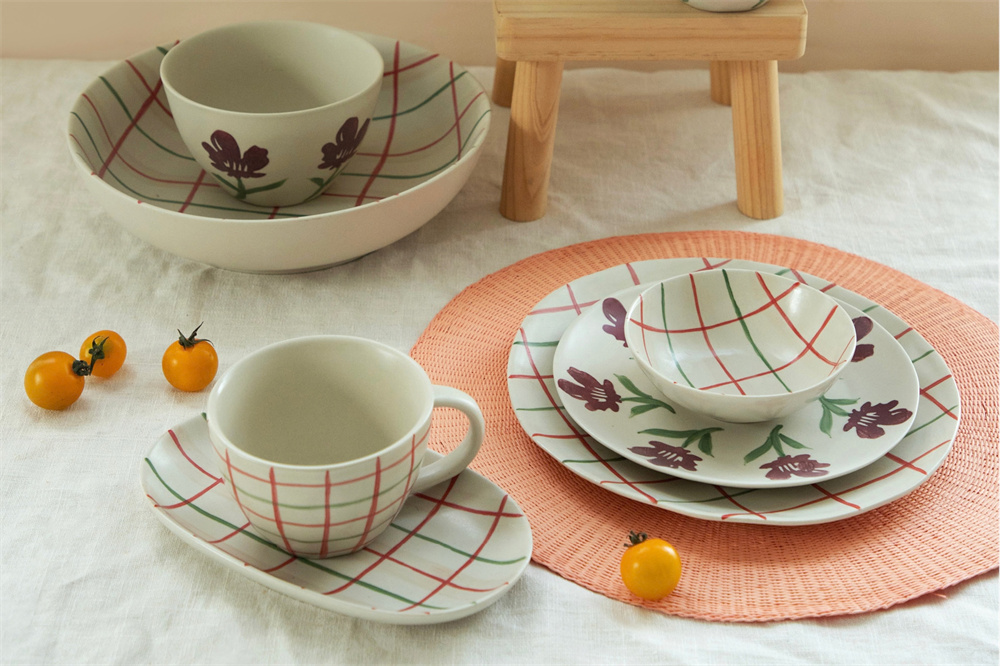
A ceramic tableware MOQ is rarely one number. In our experience at JOYYE, a collection can meet the factory’s total-order requirement and still miss the workable batch for one shape, glaze color, decal, hand-painted motif or retail box. The useful question is not simply “What is your MOQ?” It is “Which part of my collection is setting the minimum, and what can we change without weakening the product?”
That distinction matters for startups managing cash, retailers protecting stock turn, and hospitality groups planning dependable replenishment. It also produces a better quotation because the buyer and manufacturer can see the same product structure before sampling begins.
Short answer: There is no universal minimum order quantity for ceramic tableware. MOQ is usually a set of linked thresholds for the body, shape, glaze, decoration, packaging and total order. The most restrictive applicable threshold for the planned product mix becomes the binding constraint. Simplifying shared components can lower launch risk more responsibly than negotiating one headline number.
What a ceramic tableware MOQ really measures
MOQ is a production-planning boundary. It tells us when a specific combination of materials, tools, skills and packaging becomes repeatable enough to schedule and commercially sensible to run. That is different from the smallest number of pieces a craftsperson could physically make. A laboratory glaze batch or handmade prototype may produce one sample, but it does not recreate the economics or controls of mass production.
At JOYYE, we find it more accurate to discuss an MOQ architecture than a factory-wide number. A project can have all of the following at once:
| MOQ layer | What it controls | Question to put on the quote |
| Total order | Overall commercial value and production schedule | What is the minimum for the complete purchase order |
| Body or material | Clay recipe firing route and compatibility | Can products share the same ceramic body |
| Shape | Tooling forming setup and production molds | Is the minimum per shape or across a shape family |
| Color or finish | Glaze preparation application and firing | Is the minimum per glaze color |
| Decoration | Decal print run screen setup or hand-painting plan | Is the minimum per artwork and per placement |
| SKU | One sellable shape color decoration and package combination | What quantity is required for each SKU |
| Packaging | Printed box insert label or sleeve run | Is the packaging minimum higher than the product minimum |
The binding constraint is the most restrictive applicable layer for the planned product mix. If a custom box requires a separate run that the proposed packaging plan cannot support, packaging is setting the project minimum. If three colors divide a workable glaze batch into three impractical lots, color is the constraint. Naming that constraint gives both sides something practical to solve.
Why JOYYE Does Not Publish One Flat MOQ
JOYYE does not use one flat MOQ to describe every ceramic tableware project. A standard shape with an existing finish, a custom glaze program, a new decal collection and a proprietary molded form can each have different production constraints. During quotation, we identify which layer becomes the binding constraint and whether shapes, colors, finishes or packaging can be consolidated without weakening the product concept.
The same project can therefore carry several linked MOQ conditions. Any final MOQ shown in a quotation should be read together with its basis: per order, per shape, per color, per artwork, per SKU or per packaging version. Final requirements must be confirmed against the specific product architecture and quotation.
Why ceramic manufacturers require minimum quantities
Ceramic production combines fixed preparation work with variable piece-by-piece costs. Before saleable products appear, teams may prepare a body or glaze, install molds, adjust forming equipment, test colors, plan kiln space, set up decoration, define inspection criteria and organize packing materials. Those tasks exist whether the run contains a modest batch or a much larger one.
Variable costs then rise with output: clay, glaze, labor, energy, packaging, inspection and expected process loss. When fixed preparation is divided across very few pieces, the apparent unit cost can climb sharply. A small fragmented run may also use more line changes and handling than a larger continuous run.
Kiln capacity is only one part of the answer. A large factory can have substantial total output while still needing an efficient quantity for a particular shape, color or craft. Overall capacity does not make every micro-batch efficient.
How molds affect ceramic tableware MOQ
A new ceramic form normally moves through a master model, working molds and multiple production molds. One master does not necessarily support the planned output by itself. The production team may need several working molds because ceramic molds wear, absorb moisture and cycle through forming and drying. The number required depends on the forming method, shape complexity, schedule and intended volume.
That is why mold payment and production MOQ are separate decisions. Paying for tooling funds product development and the molds needed for production; it does not automatically eliminate the minimums for body preparation, glaze, decoration or packaging.
A useful planning equation is:
Allocated mold cost per piece = total mold investment ÷ planned quantity
The equation is not a quotation. It simply shows why proprietary forms carry more development cost at a small launch quantity. Existing molds can reduce tooling time and design risk, but buyers should still ask what other minimums remain.
Forming method changes the batch logic
Jiggering or jolleying suits many round plates and bowls; pressing can support repeatable forms at scale; slip casting handles complex or hollow shapes; hand forming and hand finishing add flexibility but also labor planning and variation. “Handmade” should not be interpreted as “no MOQ.” A small team still needs enough work to prepare materials, maintain technique and hold an approved visual range across the batch.
Bodies glazes and colors can become the real constraint
Stoneware, porcelain, bone china, earthenware and specialist bodies behave differently in forming, drying and firing. Changing the body may require separate material preparation, cleaning, firing conditions or tests. Even where two products look compatible in a mood board, they may not be suitable for one production lot.
Glaze creates another split. A standard glossy glaze, a matte finish, a reactive effect and a crackle surface do not share the same process assumptions. Every added color can create a separate preparation, application and approval lot. With reactive glazes, the buyer should approve a representative range rather than one “perfect” reference piece because natural variation is part of the intended finish.
Our practical advice is to decide where variation supports the brand and where consistency is commercially essential. If three shapes can share one approved glaze, that may preserve assortment breadth without multiplying color batches. If every shape has its own color, the total order may look healthy while each color lot remains too small.
For a deeper comparison of finish processes and their commercial trade-offs, see JOYYE’s guide to ceramic finishes.
Decoration creates its own MOQ
Decoration is often where apparently similar projects diverge. A solid glaze may be integrated into the main firing route. A decal can require artwork separation, printing screens or plates, a print run for each size, application labor and an additional firing. Metallic details may introduce another firing route and specific care requirements. Embossed or debossed marks affect the mold itself.
Decals and printed artwork
Confirm whether one artwork size fits every item. A plate, bowl and mug may each need a separate decal size or placement file. Ask who owns the production artwork, whether unused decals will be stored, for how long, and whether the same color standard can be reproduced on reorders. The cost of a decal setup may be fixed even when the ceramic piece uses an existing mold.
Hand painting
Hand painting replaces a print run with skilled labor, but it does not remove batch planning. The team needs an approved golden sample and, when variation is intentional, boundary samples that show the acceptable lightest, darkest, fullest and sparsest outcomes. Agreeing that range before production is more useful than asking hand-painted pieces to look machine-identical.
Packaging can set a higher MOQ than the tableware
Ceramics and packaging often come from different production systems. A factory may be able to make the product batch while a packaging partner requires a larger print run for a full-color retail box, molded insert or branded sleeve. E-commerce packaging can add further structure because it must protect the product through parcel handling, not only palletized transport.
Lower-risk launch options include a standard export carton with a branded label, a generic retail box with a printed sleeve, shared box dimensions across several items, or a language-neutral box supported by market-specific labels. Unused packaging should only be produced and stored when there is a clear reorder plan; otherwise the apparent unit saving can become obsolete inventory.
Packaging must still match the sales channel and breakage risk. JOYYE’s ceramic tableware packaging guide provides more context on protective and retail formats.
How price breaks actually work
Price breaks are not arbitrary rewards for buying more. They appear when quantity changes the way costs are allocated or the process is run. A higher volume may spread tooling and setup, support more continuous forming or decoration, improve material purchasing, use kiln and packing capacity more efficiently, or align better with carton and container quantities.
Not every cost falls at the same rate. Clay, glaze and piece-rate labor remain variable. A custom package may have its own breakpoints. A color split can erase a saving that exists at the total-order level. This is why buyers should ask for the next meaningful price-break quantity and the operational reason behind it, rather than requesting a general discount percentage.
MOQ is not the same as economic order quantity
MOQ asks what the supply chain can make sensibly. Economic order quantity asks what the buyer should order when inventory, cash flow, storage, freight, stock turn, replenishment time and stockout risk are considered together. The lowest achievable MOQ is not automatically the lowest cost per sellable piece, and the lowest unit price is not automatically the best inventory decision.
For a seasonal collection, a smaller first run at a higher unit cost may protect cash and reduce markdown risk. For a repeat hospitality program, concentrating volume in fewer shapes and one dependable finish may improve replenishment and spare-stock planning. The right answer follows the business model, not a generic number.
Watch the multiplication effect in multi SKU orders
A collection expands faster than it appears on a concept board. Use this simple formula before requesting a quote:
Potential SKU count = shapes × colors × decorations × packaging versions
This represents the maximum combination count when every option is offered across every product. Actual SKU count may be lower when some shapes, colors, decorations or packaging formats are not combined. For example, four shapes in three colors with two packaging versions create 24 potential SKUs if every combination is offered. If the purchase order is divided evenly, each production lot may be much smaller than the headline total.
Dinnerware set math needs one more check
Ask whether the quotation is per piece, per set, per place setting or per carton. A 16-piece set may contain four dinner plates, four side plates, four bowls and four mugs, but production loss can differ by shape. The component with the lowest accepted output limits the number of complete sets. A production allowance should be planned by component, then reconciled into complete sellable sets and spare pieces.
Sampling does not prove a mass production MOQ
Samples are intentionally made under different economics. A glaze technician can prepare a laboratory batch; a craftsperson can hand finish a prototype; packaging artwork can be digitally mocked up. Those activities help approve the direction, but the sample fee is not the same as the setup and operating cost of repeat production.
Before mass production, distinguish a development sample, a pre-production sample and the approved golden sample. Record the dimensions, color or variation range, decoration placement, bottom mark and packaging construction that production will follow. This keeps a small sample decision from becoming an ambiguous production promise.
How to reduce ceramic tableware MOQ responsibly
The most reliable way to lower launch exposure is to remove unnecessary fragmentation. At JOYYE, we recommend simplifying the architecture before reducing quality controls.
-
Start with existing molds and differentiate through a controlled glaze or decoration
-
Limit launch colors and packaging versions, then add proven variants on reorder
-
Use one ceramic body or glaze across a coordinated product family where technically feasible
-
Choose a proven decoration route and standard packaging footprint for the first run
-
Phase the range so demand data supports later investment in proprietary forms
-
Keep food-contact testing, agreed inspection and protective packaging in scope
The point is not to make the collection generic. It is to spend uniqueness where customers can see and value it. A startup may reduce four colors to two, use existing forms and add a branded sleeve. An established retailer with sales history may support an exclusive glaze at the next price break. A restaurant group may prioritize fewer stackable shapes, one color and standard commercial packaging for dependable replenishment.
If you are deciding whether to begin with a proprietary design or an existing platform, JOYYE’s OEM and ODM manufacturing guide explains the development trade-offs. Our private label tableware guide covers the wider launch process.
Warning signs in a very low MOQ offer
A low minimum can be legitimate, but first understand the business model. The goods may be stocked items, tail goods, ready-to-ship products or a non-repeatable batch. Customization may be limited, or setup charges may sit outside the unit price. The concern is not the low number itself; it is an unclear path to consistent reorders.
Before accepting, confirm the body and finish, sample-to-production controls, food-contact requirements for the destination market, inspection scope, packaging standard, reorder availability and responsibility for unused decals or boxes. If the product cannot be repeated, decide whether that fits the sales promise you are making to customers.
Questions to ask before comparing quotations
-
What is the MOQ per order, shape, color, artwork, SKU and packaging version
-
Which minimum is currently binding and why
-
Can shapes or colors be mixed, and which process must they share
-
Which fees apply to molds, samples, artwork, decals, tests and packaging setup
-
What changes at the next useful price break
-
What is included in inspection and what acceptance sample controls production
-
What is the reorder MOQ and what happens to stored molds, decals and packaging
-
Is the quote per piece, set or carton, and which Incoterm does it use
Use one comparison matrix for every supplier
| Cost or condition | Supplier A | Supplier B | Clarification needed |
| Product MOQ | Per order shape color or SKU | ||
| Mold and sample cost | Ownership revisions and approval stages | ||
| Decoration setup | Artwork size colors and storage | ||
| Packaging MOQ | Printed components inserts and leftovers | ||
| Testing and inspection | Market scope method and responsibility | ||
| Unit price and breaks | Quantity basis and included packing | ||
| Lead time and Incoterm | Schedule trigger and shipment basis |
Do not compare unit prices until every row uses the same product specification and commercial basis. A lower figure may exclude tooling, testing, inspection, inner packaging or a decoration firing that another supplier has included.
Build an MOQ calculator before you request a quote
A simple worksheet makes the project visible. List every shape, color, pattern and packaging version, then add the planned quantity per SKU. Calculate totals by color, shape and package type. This shows where volume is concentrated and where a design decision has created a tiny lot.
| Calculator input | Example entry | What to calculate |
| Shapes | 4 | Quantity by shape and shape family |
| Colors per shape | 3 | Quantity by glaze color |
| Decoration versions | 1 | Quantity by artwork and placement |
| Packaging versions | 2 | Quantity by printed component |
| Quantity per SKU | Buyer input | Total pieces complete sets and cartons |
At JOYYE, this is the conversation we want to have before treating MOQ as a yes-or-no negotiation. When we can see the collection architecture, we can identify the binding constraint, avoidable complexity, realistic consolidation and the next price-break questions.
Plan the collection before negotiating the number
Ceramic tableware MOQ becomes easier to manage once every layer is visible. Separate the minimums, identify the bottleneck and simplify only where the brand can afford to simplify. Keep the choices that create customer value; share the bodies, finishes or packaging structures that do not need to be unique.
If you are preparing a custom ceramic tableware project, send JOYYE your planned shapes, colors, decoration methods, packaging formats, quantities by SKU, destination market and target launch date. We can review the structure with you and clarify which assumptions need technical or commercial confirmation before quotation.
Request an MOQ and SKU Review
We’ll help identify the binding MOQ layer, possible SKU consolidation and the next useful price-break questions before quotation.
Discuss your collection with JOYYE
You can also browse current JOYYE tableware collections to identify existing form families that may suit a phased launch.
Frequently asked questions
What is a typical ceramic tableware MOQ
There is no universal figure. JOYYE evaluates MOQ by the body, shape, glaze, decoration, packaging, SKU mix and total order. The quotation should state whether each minimum applies per order, shape, color, artwork, SKU or packaging version.
Is MOQ calculated per piece or per set
It may be quoted per piece, SKU, set, carton or complete order. Confirm the unit in writing. For sets, also confirm the quantity of each component and how unequal production loss affects the number of complete sets.
Can different products be mixed to reach MOQ
Sometimes, but only when the relevant process can be shared. Products may contribute to the total order while still having separate minimums for shape, glaze color, decoration or packaging. Ask exactly which layer can be combined.
Does using an existing mold reduce MOQ
It can reduce tooling cost, development time and shape risk. It does not automatically remove minimums for the ceramic body, glaze batch, decoration setup, production schedule or custom packaging.
Why does custom packaging have a separate MOQ
Packaging is usually produced through a different supply chain with its own printing, cutting and insert setup. Its most efficient run may be larger than the ceramic product batch.
Does a higher quantity always reduce unit price
Not at the same rate or in every project. Savings depend on whether the added volume improves setup allocation, material purchasing, production continuity, kiln loading, packaging or logistics. Variable costs remain.
Can a factory produce below its standard MOQ
It may be possible with a surcharge, reduced customization, stock components or a different schedule. The buyer should understand what changes and whether the resulting product can be repeated.
How can a startup reduce ceramic tableware MOQ
Use existing forms, launch fewer colors, share finishes across shapes, choose proven decoration and use standard packaging with a label or sleeve. Add proprietary molds after demand is better established.
Is reorder MOQ the same as first order MOQ
Not necessarily. Reorders may reuse molds, artwork or stored packaging, but minimums for glaze preparation, production scheduling and packing can remain. Storage terms and the condition of tooling or materials should be confirmed.
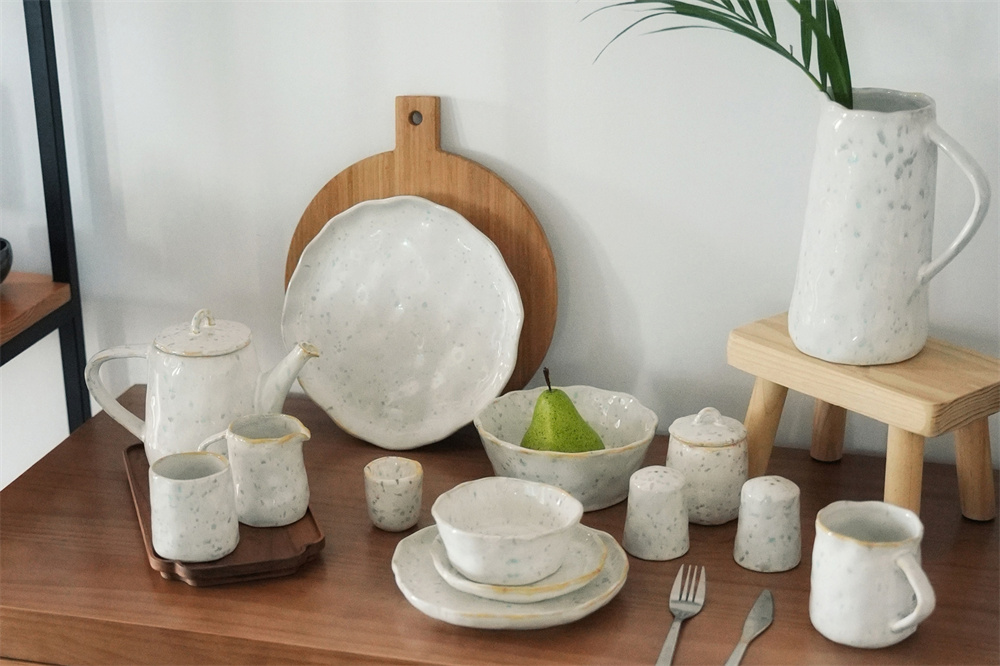 OEM vs ODM Ceramic Tableware: Which Model Is Right for Your Brand
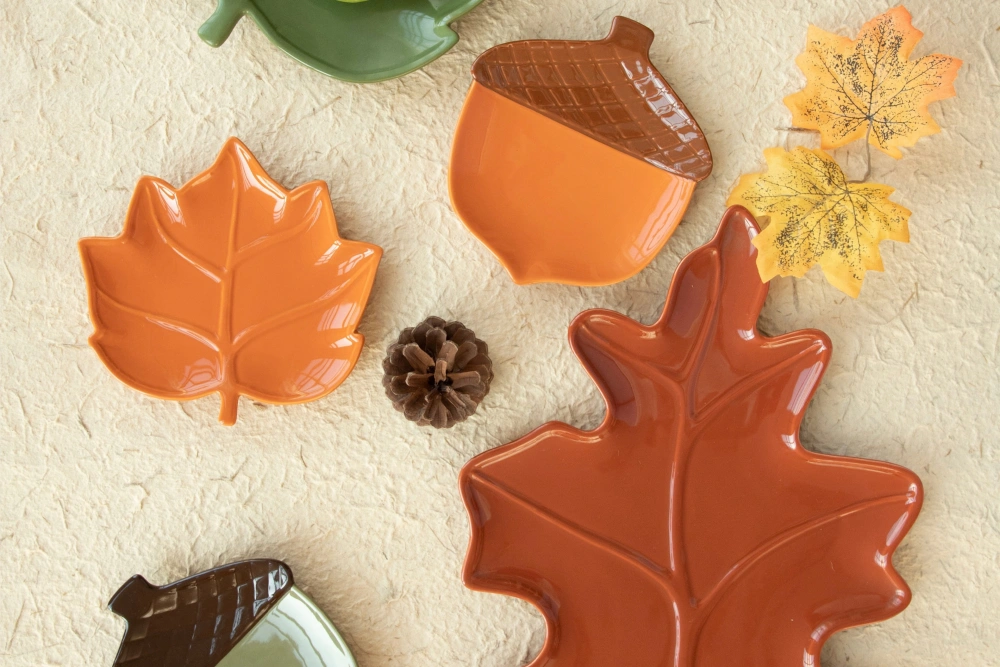 B2B Ceramic Plate Sizing Standards for Custom Dinnerware Manufacturing
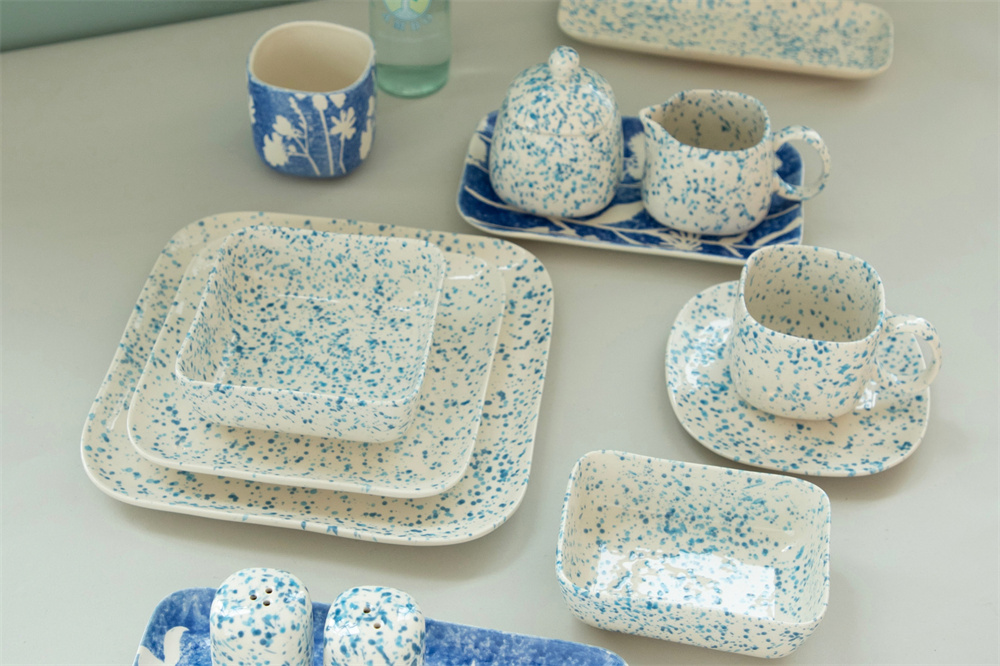 Restaurant Dinnerware Testing: Durability & Commercial Washing
 Interior Design Trends in Portugal for 2026: Colors, Materials & Ideas for Modern Homes